Gan Liu: “Real Reform Must Bring Down Traffic Fatalities!” — A Voice from the Managers’ Forum at the World Transport Convention

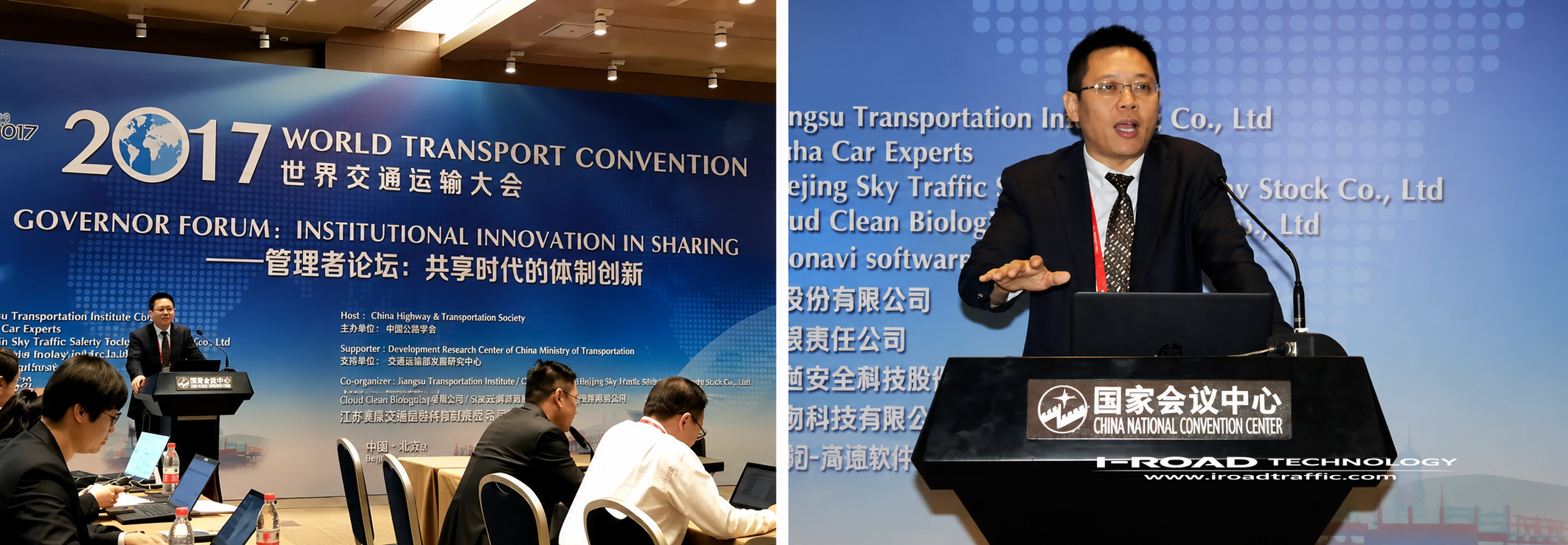
On June 6, 2017, during the inaugural World Transport Convention (WTC), the I-ROAD China team organized a managers’ forum on the theme of “Institutional Innovation in the Sharing Era.” I-ROAD founder Liu Gan delivered an address on reform and innovation in road traffic safety. The full text follows.

Distinguished leaders and guests: the theme of today’s managers’ roundtable is institutional innovation. My report covers three areas: first, the risks and pain points at the source; second, looking through the surface to the essence; and third, a focus on reform and innovation.

Part One: Risks and Pain Points at the Source

Based on my research and analysis, China today faces a high-pressure, high-risk traffic safety environment, characterized by unsafe people, unsafe vehicles, unsafe roads, and harsh weather conditions. Let me share some data—figures I collected on people, vehicles, and roads over the five years prior to 2016.

First, on people. Among all motor vehicle drivers, novices with fewer than five years of experience accounted for 38.7%, growing at an average of 9.6% per year. Over roughly the past two decades, more than 500 million rural residents have moved into cities, and throughout this process both driver education and road traffic safety education have lagged behind. More broadly, road traffic safety has suffered from an emphasis on planning, neglect of design, and blind management. Although some engineering consultancies in transport planning and design now take on projects all over the world, traffic safety engineering design has not kept pace, and the high number of traffic fatalities has not come down.

Second, on vehicles. Here I want to commend the Ministry of Public Security, which has spoken out forcefully in recent years, becoming the first to name 2,008 vehicle models that fail to meet national safety technical standards or otherwise violate regulations—publicly labeling them “killer models.” By my own count, vehicles in operation for more than five years made up over 82% of the total, growing at an average of 7.5% per year. We all know the difference between domestic and imported cars: a new car feels good when you buy it, but what becomes of the safety and comfort delivered by its mechanical performance after three years? After five? Today I offer this only as food for thought, not as an in-depth analysis.

Then, on roads. China’s expressways already total 130,000 kilometers, yet more than 69% have been in operation for over five years, growing at 12.3% annually. It must be understood that China’s expressways lack safety evaluation in operation—some have run for five, ten, or even more than fifteen years since opening without ever undergoing a safety operations assessment. For national, provincial, county, township, and village roads, the share in operation for more than five years and the corresponding growth rates are, respectively: 91% and 3.3%, 92.4% and 3.5%, 96.2% and 1.4%, 95.4% and 1.5%, and 85% and 4.6%. Consider what these figures imply: with an average of over 92% of roads in service for more than five years, none having undergone scientific traffic safety upgrades or improvements, and many still operating at the standards of the 1990s and early 2000s—how poor must their condition be?

Weather, too, demands our attention. Take Beijing in 2015: days with substandard visibility accounted for nearly 50% of the year, heavy pollution 11%, high winds 2%, and rain 27%—even though rain was once rare in the north.

What do I aim to prove with these figures on people, vehicles, roads, and environment? Simply that our road traffic safety situation is one of high pressure and high risk. We often see various notices and directives from relevant national departments calling for strengthened traffic safety work. Have they helped? I believe their effect has been very small—though I will not say they have had none. The Ministry of Transport has likewise applied many measures through its highway safety “life protection” projects to try to improve our traffic safety. Yet our traffic fatality figures remain discouraging: between 220,000 and 270,000 deaths each year.

In the field of road traffic safety lies a glaring institutional contradiction: who can be held responsible for safe production? The transport authorities handle highway construction and management; the housing and urban-rural development authorities handle urban road construction and management; the industry and information technology authorities oversee standards for vehicle safety performance. Yet today all traffic accident injuries are left to the traffic police to resolve—the public security authorities, though not the public security system as a whole. Within that vast force, only a small department called the traffic police is left to shoulder our traffic safety. This is one of our institutional contradictions.

When I conducted field research in Yunnan, I photographed the G8511 Kunming–Mohan Expressway, a stretch known as the “Slope of Death”—a 27-kilometer downhill section that, since opening, has seen thousands of accidents and hundreds of deaths. On such roads, minor accidents typically draw rectification recommendations from the local traffic police, while major accidents prompt investigations led by higher-level government bodies. The transport, housing, and industry authorities then convene experts; after comparing against standards and conducting expert review, they issue a report concluding that the road meets construction standards and that its traffic safety facilities meet the relevant standards. Finally, accountability for management is examined, and the remedy is to arrest someone. Once a conclusion of “compliance with standards” is firmly established, no matter how many rectification recommendations the traffic police propose, the justification for renovation is gone—there is no reason to spend money. Many of China’s expressways are operated by listed companies, all highly regulated enterprises that require a reason to spend even one cent. However many hundreds or thousands die on a given stretch, you must still tell them why a sign should be replaced or a line repainted—was the original non-compliant with the relevant national or industry standards? What does this mean? The institutional contradiction is stark. Its outward symptom is that our country has always written its standards and codes around the central theme of “construction,” while the central theme of “safety” is missing.

For urban roads, the Ministry of Housing and Urban-Rural Development has one set of standards; for highways, the Ministry of Transport has another; and the Ministry of Public Security has its own standards for traffic signal installation and the like. To this day, highway engineering standards barely support the use of traffic signals along highways, and the principle of highway management authorities is to use traffic signals sparingly. Why sparingly? I will not expand on that today.

Let me also speak to the rupture of the traffic safety industry chain. Across the entire road traffic safety industry—from management, planning, design, and construction, through engineering and manufacturing, to maintenance—this chain must be tightly linked and coordinated. Take a crash-protection device installed at an intersection: our original intent in installing it is safety. But whether that safety objective survives through its design, construction, and maintenance is hard to say. Let me put it plainly: it cannot be achieved. Food has food safety standards; electrical appliances have electrical safety certification standards. Yet road traffic safety facilities, which bear directly on human life, have long been able to flow freely into the market. Take a crash barrel placed somewhere—can it actually absorb an impact? Does it meet national standards? Road traffic safety facilities usually have only recommended standards, and those standards cannot govern their market circulation. Any kind of crash barrel can be set down on the road; as long as it shows red-and-white markings, it counts as a crash barrel, and that is deemed acceptable. Such is the reality—the entire industry chain is severely broken.

There is another phenomenon, which I mentioned earlier: heavy on planning, light on design, blind in management—top-heavy and shallow-rooted. And there is the disregard for enterprises in the traffic safety field. As I will discuss when I come to the obstacles to innovation, enterprises working in road traffic safety have no standing within transport circles, and platforms linking industry, academia, and research are lacking. Earlier, Mr. Si of Yunjie Biotechnology spoke of how hard it is to apply his technological innovations—because traffic technology achievements must be realized through design, and without a standard they cannot be deployed, no matter how much research supports their merits.

Part Two: Looking Through the Surface to the Essence

I call for institutional reform, but such reform must be resolved at the highest levels, and implementation takes a long time. I am of course making my own efforts—through frequent public advocacy and personal outreach—to push reform of the road traffic safety management system. This morning I exchanged ideas with and sought counsel from Professor Wang Wei of the Chinese Academy of Governance. But while the system remains unreformed, should we simply sit and wait for it, letting problems and incidents continue to unfold? Clearly not. Let us therefore examine road traffic safety management from several different perspectives.

From the management perspective, people, vehicles, roads, and environment all matter greatly. It is like sending our children to school: they must learn piano, do well in physics and chemistry, excel in Chinese, math, and English, ideally play some football, and know a little chess and Go. That is exactly how our traffic safety management operates today. Look at the documents on road traffic safety issued by the Ministry of Transport and the Ministry of Public Security—they are almost exhaustively comprehensive. I have found that the defining feature of today’s high-level directives is their length: ten-thousand-character treatises, sweeping and all-encompassing. Yet no single specific point is decisively resolved, and so the same problems and errors are repeated again and again.

From the academic perspective, let me draw an analogy with art. What is art? Art expresses society’s problems through works. In traffic management, what are traffic signs and markings for? They exist to express, through traffic engineering, the rules of traffic safety, the will of the traffic manager, and the needs of road users—so that people grasp them in an instant. We must not expect all 1.4 billion people to read our laws or understand our standards and codes. There is a phenomenon today: insurance premiums are high, and after an accident the insurer pays out. And then what? All the problems are papered over; the injured public neither understands nor cares to pursue what actually caused the accident. From the academic perspective, traffic engineering is the core of the 5E framework (Enforcement, Education, Engineering, Environment, Energy). Within the entire 5E system of traffic scholarship, traffic engineering is a vital core that must express the full range of management intent, law, standards, and needs. Academic theory must also account for economic levers. Today’s traffic safety investment is set as a budget ratio within the overall road construction project. That is to say, whether a road is in Yunnan, Xinjiang, Hubei, or Shanghai, its traffic safety investment ratio is essentially the same. Surely that is unscientific, is it not? We speak of “safety first, prevention foremost”—but how can safety come first? Putting safety first means making safety investments according to differing terrain, environment, features, and economic conditions. In the United States, the discussion centers on the benefit-to-cost ratio of investment and safety economics: how much each dollar invested can yield, so that limited funds are directed toward the greatest possible return.

From the perspective of injury, harm arises from a chain of cause and effect: a harsh environment, accident risk, human error, inadequate rescue, and improper objects. Professor Huang Helai of Central South University has a domino theory, and I often tell him, “Professor Huang, I have heard you explain the domino theory only once, but now I bring it up every time I speak—I am determined to spread the idea.” The social environment, human shortcomings, unsafe human behavior, unsafe conditions of objects, the occurrence of the accident, and the formation of injury are each a separate domino; remove any one of them and the whole subsequent chain can be halted. Within this lie two variables and one constant. Clearly, vehicles travel on the road and people walk on the road—two uncertain, shifting elements: the variability of a vehicle’s mechanical performance and the variability of human psychology and physiology, both highly changeable and largely uncontrollable. And the one constant? The road, of course. Among the dominoes, removing “the unsafe condition of objects” is the most achievable. So what must be done? Building “a good road” is a basic principle.

From the perspective of occurrence, the time available for passive safety during an accident and for tertiary safety afterward is extremely limited. What must we do? We must pursue active safety. After Minister Li Xiaopeng took office, I noticed a directional signal: safety first, prevention foremost. Yet what have today’s highway safety “life protection” projects amounted to? Installing guardrails almost everywhere. We know guardrails are passive protection: a guardrail itself cannot prevent an accident from happening; it can only possibly reduce injury after an accident—though it may also worsen it. This accident photo reveals a weakness in risk control: the scene in Zhengzhou where a vehicle struck a concrete median barrier, killing twin infants and their mother. I believe this accident is not as simple as an insurer paying out—behind it lies a great deal of missing accountability.

There is also today’s fashion for intelligent transport and electronic navigation, where navigation systems frequently lead drivers in circles until they lose all sense of direction. Why the circling? It is tied to the level of transport infrastructure management; the underlying data on traffic safety facilities is weak. The forthcoming adjustment and renovation of the national highway network’s signage, and the overhaul of urban road route-guidance systems, generate facility data and changes to that data that our electronic navigation still cannot match and interact with in a timely way. AutoNavi and Didi, who work in intelligent transport, are here in the hall today—I am not sure whether anyone from Baidu is present. AutoNavi and Baidu each deploy data-collection vehicles in every city, which must take to the roads periodically to gather information. Why can the traffic management authorities not instead run a networked, digitalized system for road traffic safety facility information?

There is also the very weak state of industry capability, which I will not expand on today for lack of time. As things stand, not a single one of China’s signs, markings, or signals is fully legal or fully compliant—anyone interested is welcome to debate me on this separately.

Part Three: A Focus on Reform and Innovation

Let me speak quickly, since I have largely covered this already: we must exercise control at the source. Whether in the United States or in Europe, road construction in its earliest days rested on a standards system built around the central theme of “safety.” But we have no traffic safety standards system built around safety as its central theme. The U.S. MUTCD, so eagerly discussed within our industry, is a remarkably sound system for road traffic safety control.

To build a good road: China’s expressways today have only speed design, not speed management. Everyone admires Germany, saying you can drive as fast as you like on the German autobahn. We invited Ms. Jacobi, chair of a German federal safety committee, to the National Forum on Traffic Sign Technology Innovation in Nanjing in March. She stated publicly at the conference that on Germany’s unrestricted-speed motorways, dangerous conditions and bad weather require a speed limit of 40, never to exceed 60. And in China? In China we use variable message signs, almost like advertising, to tell you that it is raining today, slow down—while the speed-limit sign installed on the road still reads 120 kilometers per hour. There is only speed design, no speed management. In fact, today’s internet, Internet of Things, and manufacturing technologies have long been able to achieve real-time speed management. The image on this slide shows that our company’s big-data transmission technology for speed management is already mature—yet it cannot be deployed. We have innovated, but there is no environment in which to apply it.

Preventing accidents requires industry development and innovative application. The current state of science-and-technology innovation support is to subsidize enterprises up front, with no environment for innovative application during project implementation. Take the highway safety “life protection” projects: could subsidy funds be tied to the application of new technological achievements? Rather than supporting an enterprise early—giving it a million to research a technology, only for it to be unable to pay wages, unable to sell the product, and left with nowhere to turn? That, too, is an enormous waste of social cost. The best outcome is to combine pull and drive. Moreover, our road traffic safety industry must consolidate and must support the on-the-ground application of enterprises’ innovative technologies. Such application cannot rely day after day on university professors lecturing on theory. I do not mean disrespect for scholarship—I hold a part-time post at a university myself—but road traffic safety management is an application-led industry and discipline, and cannot be perpetually directed by academic finger-pointing. Some experts in the jade trade know how jade should be carved—but what use is mere knowledge? If you have never carved, hand you a piece of jade and you still cannot carve it. It is of no use.

Let me slip in one advertisement here: the new LED active-illumination road traffic signs we have successfully developed, based on a novel display technology, can meet the all-weather information-reading needs of all road users. Earlier I said the traffic signs on our roads today are not legal—why? Because the Road Traffic Safety Law explicitly requires traffic signs to be clearly legible in all weather, yet not a single traffic sign in all of China can meet that requirement. In rain, in fog, or under poor headlight conditions—or for heavy trucks and other special vehicles on certain stretches, and for non-motorized travelers and pedestrians without lighting—the signs simply cannot be seen or read clearly. Some of the earliest traffic engineering standards were often copied from abroad; some of the experts who researched these standards could not drive themselves and never conducted road-user experience surveys, yet they wrote the standards that guide traffic engineering nationwide. In fact, traffic signs take three optical forms, and national standard GB 5768 (Road Traffic Signs) clearly specifies them: retroreflective, active-illumination, and externally illuminated. On Japan’s expressways, all exit signs are mandatorily required to be active-illumination. Our company’s active-illumination signs are on display outside the hall and have been demonstrated in numerous applications across the country. According to research findings from the Traffic Management Research Institute of the Ministry of Public Security, the Research Institute of Highway of the Ministry of Transport, and the School of Transportation Engineering at Tongji University, the panel-display active-illumination traffic signs developed by Nanjing Saikang Traffic Safety Technology Co., Ltd. achieve an engineering Value Engineering (VE) ratio of investment to safety-economic benefit exceeding 80 times, and can significantly reduce accidents on specific road sections by more than 70%.

Yet even for the promotion and application of such a high-value technological achievement, as an entrepreneur and a traffic safety researcher I must still say, at a major conference like this, that it is deeply, deeply painful—because of the institutional problem. From the problems I have described, it is clear that law alone is not enough, nor are standards alone. Law, standards, quality, and our education must all support one another before traffic safety can be done well. Traffic safety is bound up with behavioral rules, physical performance, shared objectives, and control measures.

We must also have zero tolerance for accident liability and traffic violations. Recently a professor in our circle has been urging that the Criminal Law’s provisions on liability for drunk driving not be amended—I am told the proposal would allow people who have had a little to drink, but who have, say, a sick family member, to drive under special circumstances. This is simply a joke. I think China is not lacking in freedom; it is too free, too open. I also study some sociology, and I have set down a number of theories and ideas—not confined to traffic safety—in my book A New Understanding of Traffic Safety: Reflections of a Traffic Maker, which I share for exchange and discussion.

发表回复

您的邮箱地址不会被公开。 必填项已用 * 标注